The Gap Between Closing a Job and Collecting the Money
Most shops are running their payment process across multiple disconnected tools.
Every time data moves between those systems by hand, something can go wrong. An amount gets miskeyed. A payment gets recorded in one place and forgotten in another. A fleet invoice sits in an outbox for two days before it gets sent. These are not catastrophic failures, but they are constant friction, and friction costs money.
Here are four places where that friction shows up most:
- 1. Remote jobs. When a customer is not present at pickup, collecting payment requires extra steps that are easy to skip or delay. Every hour the payment sits open is a risk.
- 2. Double entry. Recording a payment in the terminal and then again in the shop system creates two chances for error and one guaranteed waste of time.
- 3. Fleet billing. Fleet clients often have specific requirements for reference numbers and payment terms. Without a system built for it, shops improvise and things slip.
- 4. Refunds. Issuing a refund through a disconnected terminal and then manually adjusting the repair order is tedious and difficult to audit later.
The shops that solve this problem are not the ones with more staff. They are the ones that stopped treating payment collection as a separate task from closing the job.
What Integrated Payments Actually Means
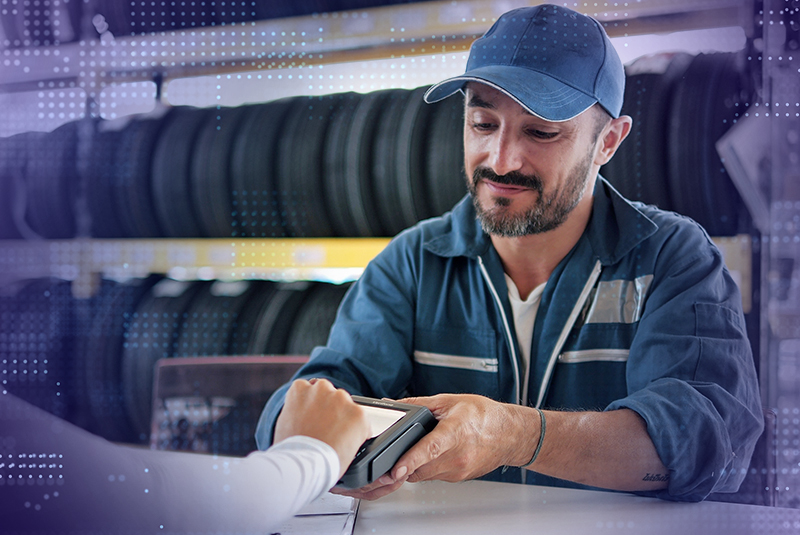
Integrated payments mean the payment terminal is connected to your shop management system so that when a customer swipes or taps, the transaction records automatically against the open repair order. No one enters anything twice.
ShopCentral now does this through a partnership with 1st Mile, the leading payment processor built specifically for the automotive industry. 1st Mile handles standard credit and debit cards, Apple Pay and Google Pay, fleet cards like WEX, Voyager, Fuelman, and the Goodyear Credit Card. The terminal ships directly to the shop, and setup happens through the ShopCentral integration screen.
A few things worth knowing about how it works in practice:
- Pay-by-link. For customers who are not in the shop, the service advisor can send a payment link by text or email directly from ShopCentral. The customer pays from their phone or computer, and the RO updates automatically.
- Down payments. The payment request can be for a partial amount, so shops can collect a deposit before the work begins.
- Refunds. Refunds are processed back to the original payment method and can be started from the Financial Report in ShopCentral. The process is simpler than it used to be.
- Surcharges. Shops that want to pass on card processing fees can enable surcharging. When active, the system displays the surcharge amount and includes on-screen language advising customers to use a debit card to avoid it.
Stop Losing Money And Add Integrated Payments on ShopCentral Today
Built for busy shops, 1st Mile integrated payments in ShopCentral help you get paid faster, reduce errors, and keep everything in one place. Instead of chasing invoices or juggling systems, you can focus on running your business and serving customers.
Request a ShopCentral demo today to see how integrated payments can help you stop losing money and simplify the way your shop gets paid.
Share this article:


