December 1, 2025 / by Amanda Acio
Inspect What You Expect: Building a Performance‑Oriented Sales Organization
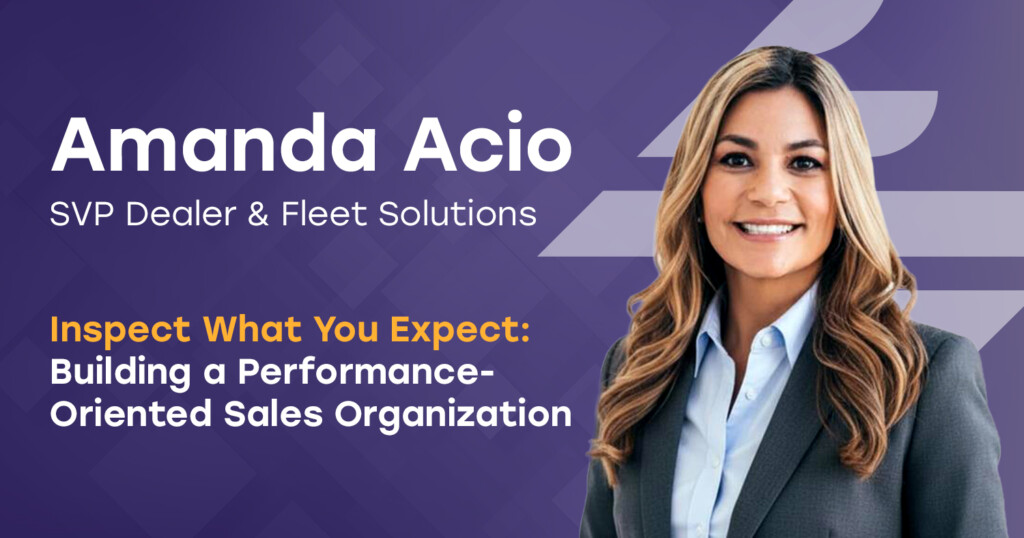
Amanda Acio, SVP, Dealer Solutions, Solera
Results don’t come from goals arbitrarily written on a whiteboard. They come from what your team does with those goals in mind, and whether leaders quietly verify the basics got done along the way. That’s the essence of “inspect what you expect.” It isn’t micromanagement, it’s leadership. I learned this running a BDC and sales teams at Serramonte Ford, sharpened it during my time helping dealers on the tech side, and of course still use it today with Solera’s Dealer Solutions partners. Everywhere I’ve sat, one truth holds: when you coach the middle 60% and consistently inspect the standards of your organization, the whole curve moves.
Expectation without inspection is just hope
In dealerships, hope is not a strategy. If you expect speed‑to‑lead in five minutes, appointments confirmed the day before, and notes updated in the CRM by close, then those behaviors need two things: a clear standard and a simple, visible inspection. Set the standard, teach it, and then check it daily—kindly, consistently, and publicly. When people know the bar and know you’ll look, performance becomes repeatable.
Seize the ‘opportunity to act’ and make follow‑through the culture
You can say you value speed-to-lead, but unless you’re inspecting it—pulling the reports, role-playing the responses, listening to the calls—it’s just lip service. You can say you want better structure, but unless you’re checking that handoffs between BDC and sales are tight, you’ll keep losing customers in the cracks. Teams believe what you enforce, not what you announce.
“Don’t just talk about it—be about it” is a sales cliché that’s 100% true. Follow‑through is a habit you design into your day as a leader or an individual contributor:
• Morning huddles: What’s the plan, who owns which deals, and what’s the target?
• 5‑2‑24 rule: Respond in 5 minutes, have two‑way contact within 2 hours, book an appointment within 24 hours.
• Blocked power hours: 2x per day, phones and texting only—no desk noise, no lot walks, no interruptions.
• End‑of‑day audit: Managers pull a few random deals per rep—notes complete, next steps scheduled, customers confirmed. • Day‑after rescue: Any no‑show gets a save‑a‑deal call, a text, and a new appt before 10 a.m.

Structure beats personality (and survives turnover)
Finding the right people matters, but let me be honest: talent alone won’t save you. Most stores over‑rely on a few heroes. I’ve hired natural talkers who never made it past month three because they couldn’t stick to process. And I’ve coached quiet grinders who became consistent top performers because they embraced feedback and knew they’d be measured on it. Inspecting what you expect reveals who’s coachable—and those are the ones who build sustainable growth.
• One‑on‑ones that matter: 20 minutes, weekly, per rep. Pipeline, blind spots, and one behavior to improve.
• Ride‑alongs & listen‑alongs: One per rep per week. Score the basics—greeting, needs, demo, ask, next step.
Hire for habits; develop the rest
This isn’t about micromanagement. It’s about giving your people the chance to succeed with clarity. When inspection is fair and consistent, it creates opportunity. People rise to the level of accountability they see modeled. And when they don’t, you have the insight to act quickly instead of waiting until a bad month turns into a bad quarter.
If there’s one lesson dealers should take into 2026 and beyond, it’s this: don’t just talk about being a performance culture—be about it. Inspect the basics. Follow through on what you say matters. Coach the middle as if they’re the key to your growth—because they are. And remember, your team will always measure their effort against the level of attention you give. Inspect what you expect, and you’ll build an organization that performs at every level.
A quick callback to coaching the middle 60%
In my last piece, I argued that your ceiling is set by the middle, not the unicorns. This is how you lift it: give the middle 60% a clear playbook, rep‑level feedback, and daily inspection that’s fair, fast, and transparent. When average reps do the basics on time, every time, your whole bell curve shifts right—faster than any single hire or spiff will move it.
A closing thought
At Serramonte, a salesperson once told me, “Amanda, I don’t need a script; I’m better from-the-hip.” Two weeks later, his show rate was about 20%. After three listen‑ins and one very short script optimization, he hit over 50% and most of the deals closed. Talent matters. Systems win. If you want a performance‑oriented sales organization, don’t lecture it into existence. Inspect what you expect—kindly, but consistently—and let the scoreboard do the talking.
Amanda Acio is Senior Vice President, Dealer Solutions at Solera, leading growth and client success across sales, service, and digital retailing. A former BDC and sales manager at Serramonte Ford and Novato Ford, she later led sales teams at the top SaaS companies in Automotive. She brings over two decades of front‑line retail and SaaS leadership, known for pragmatic execution, building diverse high‑performance teams, and deploying road-tested strategies to grow revenue and better serve her customers.
Share this article:


